Seeking Alpha’s transcripts team is responsible for the development of all of our transcript-related projects. We currently publish thousands of quarterly earnings calls per quarter on our site and are continuing to grow and expand our coverage. The purpose of this profile is to allow us to share with our readers new transcript-related developments. Thanks, SA Transcripts Team
The Cardiff headquartered firm has reported strong revenues for the first half of this year
14:17, 07 Sep 2026Updated 14:28, 07 Sep 2026
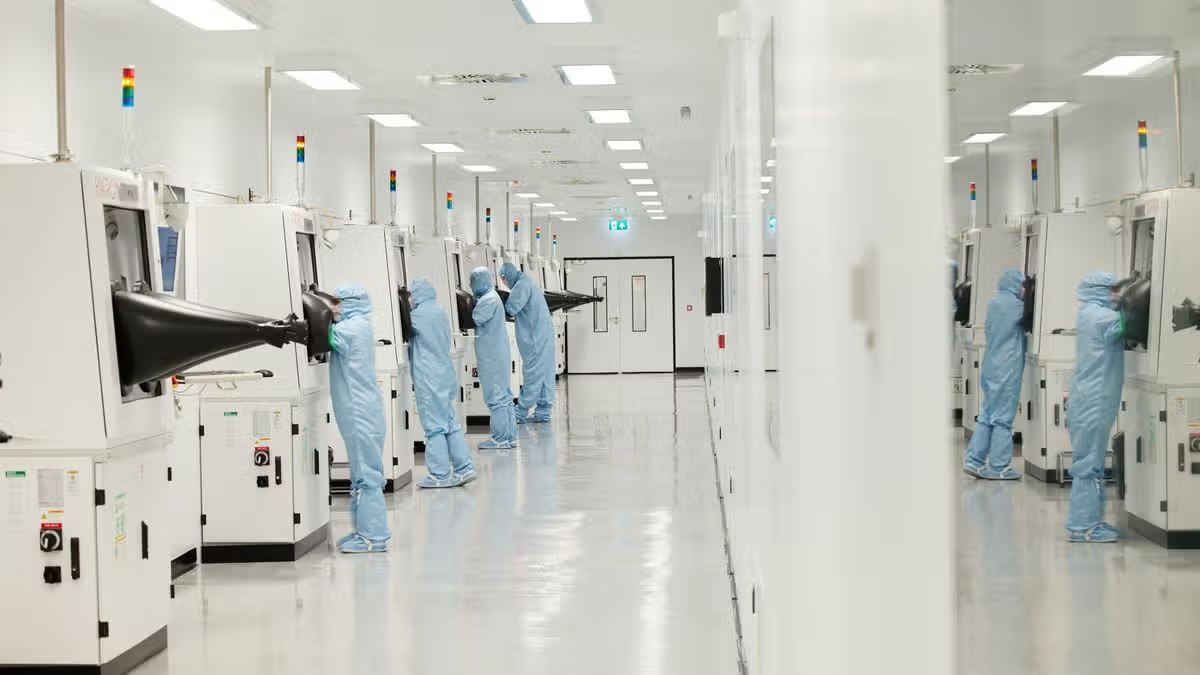
IQE(Image: RICHARD DAVIES 2022)
One of Wales’ leading tech firms, IQE, have reported a more than 40% rise in half year revenues while reaffirming a positive trading outlook in part supported by strong growth in AI and data centre related markets.
The Cardiff headquartered firm, a leading global supplier of compound semiconductor wafer products and advanced material solution, said that trading had exceeded management expectations.
Advertisement
It has also confirmed it plans to move from the Alternative Investment Market to the main London Stock Exchange in the first half of next year. This should increase its visibility with institutional investors.
Earlier this year IQE confirmed a £81m investment package to support its growth plans following a strategic review of the business.
The funding included a £30m investment by US semiconductor manufacturer MACOM Technology Solutions – which has increased its position as a key customer – which also providing a further £15m in convertible loan notes.
In its first half to the end of June IQE revenues climbed 43% a year earlier from £45.3m to £64.6m. It posted an Ebitda of £6m compared to an Ebitda loss of £400,000 in the first half of 2025. Losses before tax were down from £18.3m to £12.6m with an improved cash and cash equivalent position of £41.6m.
Advertisement
It sees the potential for upside opportunities in optical communications for data centre and AI infrastructure, underpinned by recently signed supply agreements.
IQE chief executive Jutta Meier said: “I am pleased to report a strong first half performance, with more than 40% revenue growth year-on-year across our core markets driving profitability. This reflects the strong momentum we are seeing across AI-driven data centre infrastructure, advanced sensing, wireless and defence applications, alongside improved operational execution and a more favourable product mix.
“During the period, we have demonstrated our ability to capture long-term growth opportunities across these critical markets, underpinned by a number of key supply agreements. IQE is uniquely positioned to meet customer needs and will be converting existing capacity in H2 to support the increasing demand for indium phosphide solutions.
“Looking ahead, we have initiated a move to the main market of the London Stock Exchange, marking an important next step in IQE’s development and reflecting the board’s ambition to broaden support for the business and position IQE for the future.”
A new survey has suggested nearly a third of people in the UK believe they lost money last year because of their poor maths skills. One estimate puts the cost of innumeracy at £25 billion per year. To try and tackle this the government has asked a House of Lords committee to investigate. We’ll hear from its chair, Lord Agnew.
The price of petrol is the highest it has been for almost four years. It was autumn 2022 when petrol last topped 160p a litre. We’ll look at why that is and what you can do try and bring the costs down.
It’s 50 years since the creation of the first index fund for ordinary investors – spearheaded by John Bogle, the founder of the American investment company The Vanguard Group. What was its impact on investing today?
Advertisement
And, why more than £1.5 billion languishing in unclaimed, government-backed Child Trust Funds will be the focus of a new review by the Financial Conduct Authority.
Presenter: Paul Lewis
Reporters: Dan Whitworth and Catherine Lund
Editor: Jess Quayle
Senior News Editor: Sara Wadeson
(First broadcast 12pm on Saturday 5th September 2026)
Pauline Frommer, publisher of Frommers Travel Guides, explains whats driving higher Labor Day travel costs and shares tips for saving money.
Labor Day weekend marks the end of the summer travel season and new data shows American households were conscious of finding ways to save money even as they forged ahead with travel and entertainment plans this summer.
Bank of America’s summer travel survey found that consumers’ desire to travel remained strong and that people have been focused on getting the most value out of their trip.
Advertisement
“People aren’t cutting travel out. Instead, they’re being intentional about where the money goes,” Mary Hines Droesch, head of consumer and small business products and analytics at Bank of America, told FOX Business.
“They’ll splurge on the one thing that makes a trip memorable, whether that’s a great meal, a well-located hotel, or a unique experience and then scale back elsewhere, like a more affordable flight or skipping premium add-ons, without feeling like they gave up what mattered,” Droesch said.
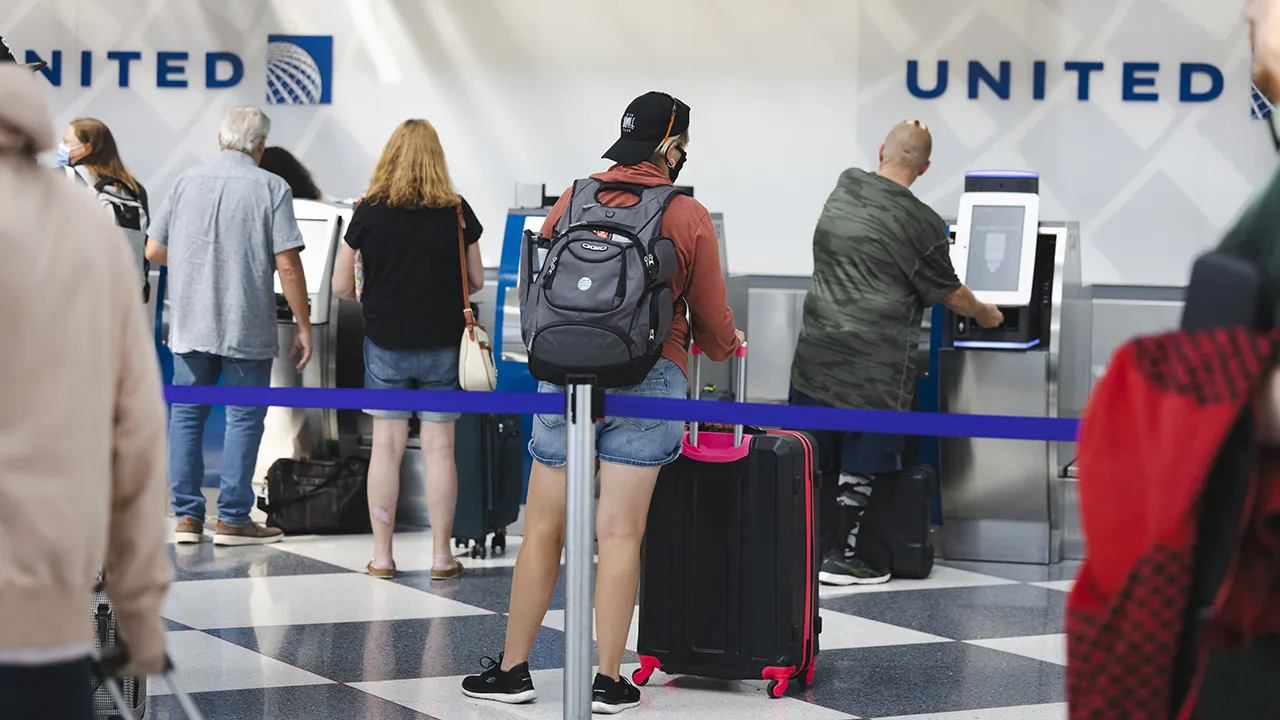
Americans stuck with travel plans this summer, though some looked to shorten their trips or “travel stack” vacations on top of other trips to save, Bank of America found. ( Taylor Glascock/Bloomberg via Getty Images)
Droesch noted that the Bank of America data showed that shorter “micro-vacations” have given travelers “a reset without the price tag of a longer getaway,” and that about one in five members of Gen Z planned shorter trips this year than in past years.
Advertisement
Additionally, over half of Americans “planned to stay closer to home, crossing state lines rather than booking a costlier long-haul flight,” she added.
Consumers have also engaged in “travel stacking,” which Droesch said is “extending a trip already planned around a concert, wedding, or sporting event rather than paying for a separate vacation later.” The firm found that nearly one-third of Americans traveling to live events opted to extend the trip to spend more time exploring their destination.
Elevated gas prices have had some impact on consumer behavior this summer. (M. Scott Brauer/Bloomberg via Getty Images)
“Rising costs, particularly gas prices, are having a mixed impact this summer. About 23% of survey respondents planned to reduce the number of trips they take, while 31% said fuel costs had no impact on their plans at all. Rather than skip travel entirely, 22% said they planned to cut back on accommodations to offset higher gas prices,” Droesch said.
Advertisement
About one in four Americans, or 22%, who were traveling this summer said they are scaling back their spending on their lodging accommodations and food to offset their fuel costs, the firm’s research revealed.
Among consumers who aren’t traveling, the top reasons cited for staying home are that they can’t afford to travel right now (56%), are holding off on big purchases amid economic uncertainty (25%) and don’t like traveling (20%).
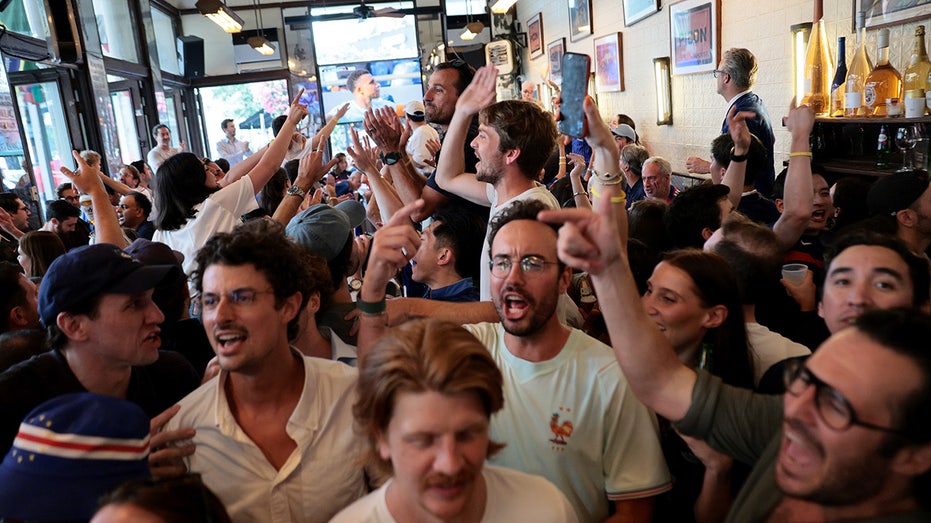
The World Cup helped drive the summer travel season in June and July. (Michael M. Santiago/Getty Images)
Bank of America found that 61% of Americans were willing to make some sort of financial trade-off to afford to travel to a live entertainment event, such as cutting back on dining out (26%), taking on extra work or a side hustle (18%) and using credit cards (18%).
Advertisement
About half of consumers (46%) said they plan to redeem financial rewards this summer – such as credit card rewards, banking loyalty program offers and similar rewards. Members of Gen Z are the most likely to do so, at 80%, compared with 60% among millennials, 35% of Gen X and 19% of baby boomers.
The Bank of America analysis also found that consumers are mindful of financial institutions’ benefits and other offerings when planning their travel, such as credit card rewards bonuses above baseline rewards (37%), personalized cash-back deals (30%), enhanced fraud monitoring while traveling (28%) and exclusive offers for travel and premium experiences (26%).
Chancellor promised to address the rising burden on businesses ahead of next month’s Budget
Alistair Houghton Editor, Business Live , David Hughes Christopher McKeon and Helen Corbett and Press Association
11:52, 07 Sep 2026
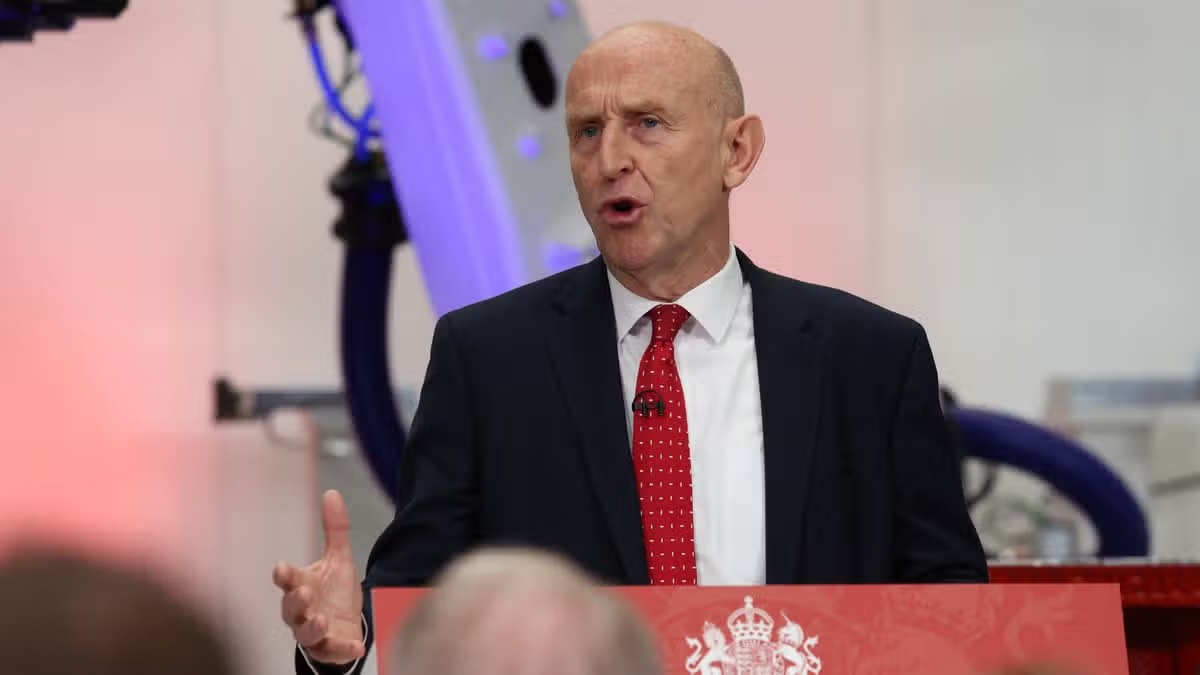
Chancellor of the Exchequer John Healey delivering his speech on economic growth at at the Manufacturing Technology Centre in Coventry(Image: Betty Laura Zapata/PA Wire)
Chancellor John Healey said the UK economy was “turning a corner” as he pledged to rein in public expenditure ahead of next month’s Budget.
Delivering his first major address since taking charge at the Treasury, Mr Healey acknowledged the strain of high government borrowing costs and vowed to ease the growing pressure on businesses.
Advertisement
Mr Healey sought to strike an upbeat tone about the UK’s economic outlook, despite the ongoing turbulence caused by global crises including the conflict in the Middle East and Russia’s invasion of Ukraine.
Speaking in Coventry ahead of next month’s Budget — the first since Andy Burnham moved into 10 Downing Street — Mr Healey said: “The Prime Minister and I are in lockstep in our commitment to meeting the fiscal rules at the upcoming Budget, to balancing the books with a buffer to protect against uncertainty.
“To controlling borrowing to bear down on inflation and reducing long-term pressures on our public finances.”
He argued that the mounting cost of debt interest demonstrated that “staying true to our values means being honest about the need to control government spending”.
Advertisement
Yet he maintained there remained an “optimistic story” to be told about the UK economy, which he said possessed “huge latent potential”.
It was, he said, “a country turning a corner, a country whose people, businesses and communities are ready to seize the opportunity of new technologies and new ideas”. Outlining his vision for the economy, Mr Healey confirmed the Government would extend its overhaul of judicial review from energy projects to encompass all major infrastructure schemes.
He stated the reforms would ensure “vexatious litigation and challenge can’t block economic growth”.
The Chancellor also reaffirmed the Government’s pledge to devolve power away from Whitehall, announcing he would unveil a “roadmap to fiscal devolution” at next month’s Budget.
Advertisement
He said: “London, of course, is our powerhouse, but if our city regions could emulate the success of those in France or Germany, growth in our country would be transformed.”
In advance of that, he revealed the British Business Bank would be injecting £150 million into high-growth firms across the North of England, while also announcing the establishment of a “Northern 500” collective of “the North’s most ambitious mid-sized businesses”, to be led by regional mayors.
Mr Healey said he wanted twice as many “unicorn” firms in the UK and to make it easier for businesses to test new technology.
Mr Healey said: “So, I’m setting an ambition now to double the number of unicorn firms in this country.”
Advertisement
He said he would also aim to have “sandboxing” powers in place so businesses and innovators can test technology from pavement robots to drones to life-saving medical equipment, which he said regulation currently prevents.
WEST PALM BEACH, Fla. — Regan Hutsell, Miss Texas, was crowned Miss America 2027 on Sunday night, capping a week of competition that drew contestants from all 50 states, Puerto Rico and the District of Columbia to the Palm Beach County Convention Center.
Hutsell, 25, becomes the 99th woman to hold the Miss America title, succeeding outgoing titleholder Cassie Donegan, who crowned her successor onstage as part of the pageant’s longstanding tradition. Along with the crown, Hutsell receives scholarship money as part of her victory prize, according to Yahoo News.
Born in Houston on Dec. 12, 2000, Hutsell trained at Feijoo Ballet School in Texas and began dancing at age four. Her path to the crown included a notable stint as a professional dancer: at age 18, she joined the Radio City Rockettes and performed during that year’s holiday season, before going on to join the Birmingham Royal Ballet in 2021.
Competing as Miss Houston, Hutsell won the Miss Texas title on June 27, 2026, at the Eisemann Center in Richardson, Texas, earning her spot to represent the state at the national competition. Her community service initiative, titled “Your Body Is Your Home,” focuses on body image and physical and mental well-being.
Advertisement
Hutsell electrified the crowd at the Kravis Center for the Performing Arts during Thursday’s talent portion of the competition with a fluid jazz dance routine performed to “Le Jazz Hot,” which earned her preliminary awards in both talent and fitness heading into the final night of competition.
Speaking ahead of the national competition, Hutsell described what the Miss America organization has meant to her personally.
“Miss America has changed my life,” Hutsell said. “When I think about Miss America, I think of the four points of the crown, which stand for service, style, scholarship, and success. I can say that every single one of those aspects has influenced my life and has truly transformed it. Every single person I meet as Miss Texas, I want them to truly feel seen, known and loved, and to feel the hope that they can accomplish anything they want to. I stand here as proof of that.”
Sunday’s final competition featured 11 semifinalists selected from the full field of 52 contestants, including Hutsell, along with Miss California Sharlize True Trujillo, Miss District of Columbia Evelyn Smith, Miss Hawaii Carly Yoshida, Miss Illinois Kate Dimmett, Miss Iowa McKenzie Kerry, Miss Louisiana Shelby Bordelon, Miss Mississippi Jane Granberry, Miss New York Madison Oh, Miss South Carolina Lindsay Jones and Miss Utah Erika Dalton.
Advertisement
The semifinalist round included a compressed version of the full competition, with contestants moving quickly through fitness and talent segments before facing an improvised challenge in which they had 30 seconds to respond to a specific word, such as freedom, innovation or unity, chosen by pageant officials. Hutsell’s assigned word was “courage,” and she spoke about the meaning of courage during her response to the judges.
Among the other 52 contestants at this year’s competition was Miss Massachusetts Ashlyn Mercier, a police officer from Westborough, Massachusetts, whose participation drew attention given her law enforcement background. Miss Florida, Alexandra de Roos, won the pageant’s Quality of Life Award, recognized in part for her advocacy work supporting people who have sustained brain injuries. De Roos, from Winter Haven, Florida, attends the University of South Florida and is pursuing a career in medicine as a neuropsychiatrist.
Outgoing Miss America Cassie Donegan, 28, reflected on her own demanding year in the role during comments following Sunday’s ceremony, describing a schedule that frequently left her physically and mentally exhausted despite the personal fulfillment the experience brought her.
“Some days, am I exhausted? 100%. Absolutely. There are some 10-hour days where I’d get home, and I was like, ‘What are words? I don’t know how to be human right now,’” Donegan said. “Your brain just goes to mush, but your heart is so full at the same time, so it’s worth it.”
Advertisement
Donegan, an accomplished singer who won the pageant last September following her earlier victory in the New York state competition, spent her reign touring the country for speaking engagements, philanthropic events and performance opportunities, including singing the national anthem at the Daytona 500. She previously told People that being Miss America felt “different every day,” an aspect of the role she said she came to appreciate. Donegan credited her prior entertainment industry background with helping her adapt to the demanding travel schedule the title required.
“I am used to living out of a suitcase or being on a plane all the time, going contract to contract or performance opportunity, so I think I’m a little bit more conditioned to that than some of our previous Miss Americas have been,” Donegan said.
As the newly crowned Miss America 2027, Hutsell is expected to embark on a similarly demanding schedule of appearances, advocacy work and performances over the coming year, continuing to promote her body-image and wellness-focused platform while representing the Miss America organization at events across the country. Her background as a professional dancer, spanning both the Rockettes and the Birmingham Royal Ballet, distinguishes her from many past titleholders and is expected to remain a central part of her public identity throughout her reign, following the talent performance that helped propel her to the national title Sunday night in West Palm Beach.
We’re talking benefits. Turned down for Personal Independence Payment? Thousands of people are challenging benefit decisions at independent tribunals, and the majority are winning. We hear why so many initial PIP assessments are being overturned and what it could mean for you.
Talking openly about debt. We meet the influencer behind ‘Figuring out finances at 40’ who’s breaking the taboo around financial struggles. From revealing exactly how much debt she’s in to documenting the mistakes she’s made and the practical steps she’s taking to get back on track.
Could your holiday booking be too good to be true? A new investigation by consumer group Which? has raised serious questions about checks on Booking.com after researchers successfully created a fake holiday rental at one of Britain’s most famous addresses: 10 Downing Street. So how easy is it for fraudulent listings to slip through the net, and what should travellers look out for?
Advertisement
And if you’ve got a story or an experience you’d like to share, you can get in touch – just email cfb@bbc.co.uk
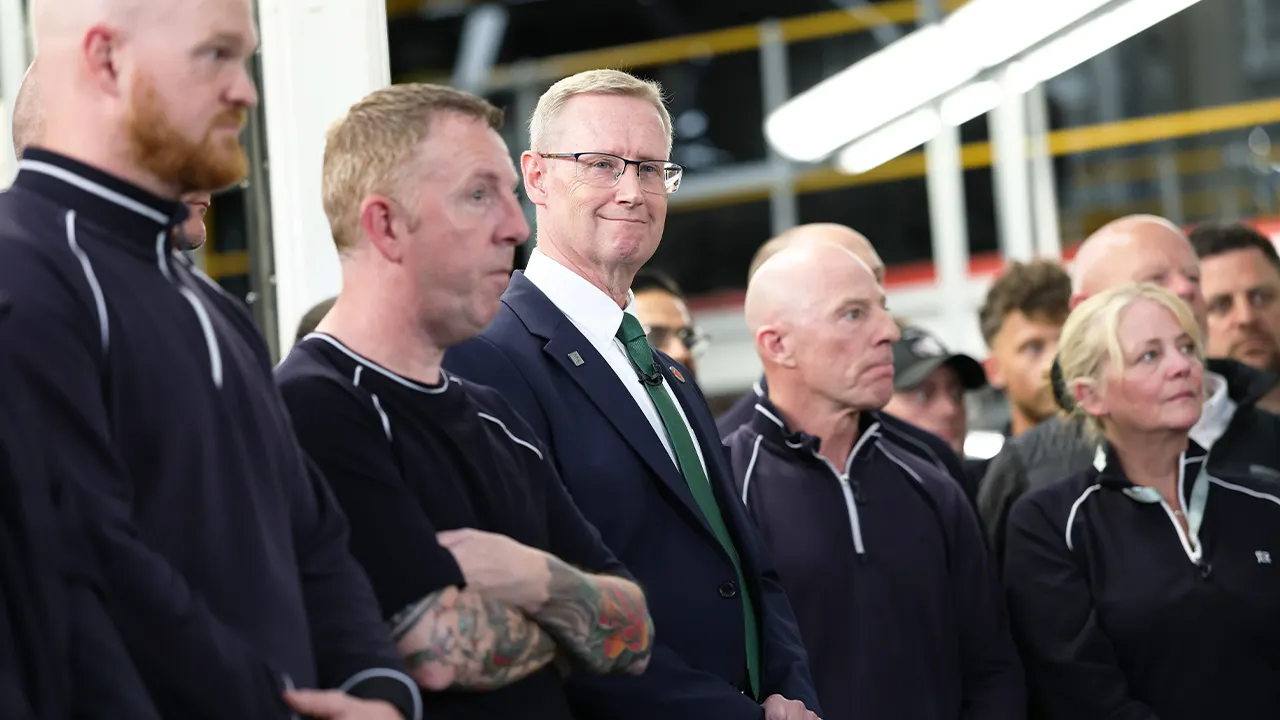
British carmaker Jaguar Land Rover (JLR) has opened a voluntary redundancy program for salaried and management staff as part of a sweeping multibillion, cost-cutting campaign.
The Tata Motors-owned vehicle manufacturer confirmed the voluntary exit scheme for white-collar staff over the weekend as it moves to lower its global operational break-even threshold to 300,000 vehicles annually. While unconfirmed British media reports indicate the two-year operational overhaul could impact up to 4,000 non-assembly positions across its 30,000-strong U.K. workforce, JLR noted that hourly assembly line workers at primary manufacturing facilities will remain outside the scope of the program.
Advertisement
“Over the past three years, we have transformed our product portfolio,” a JLR spokesperson told outlets. “To achieve this next phase, we must further simplify our organization, improve efficiency, and build greater resilience while adapting to evolving global market conditions.”
Jaguar Land Rover emblem near the car dealership. (Getty Images / Getty Images)
The restructuring follows mounting financial and operational pressures across international markets. Vehicle imports into the U.S. carry a 10% tariff rate, narrowing profit margins. In its domestic market, JLR faces intensifying competition from lower-cost Chinese electric vehicle imports, including Chery’s Jaecoo 7 SUV.
The cost-cutting push also comes in the wake of a major cyberattack late last year that forced JLR to temporarily halt production across several international facilities, contributing to a 27% drop in output and an estimated $2.5 billion, or £1.9 billion, drag on the broader British economy.
Advertisement
U.K. Business Secretary Jonathan Reynolds confirmed he would meet with JLR Chief Executive Officer PB Balaji and representatives from Unite the Union.
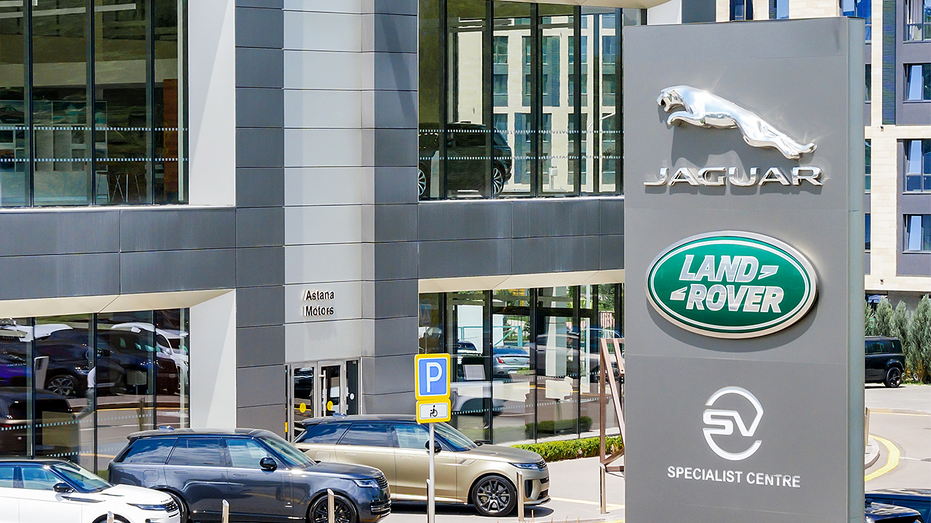
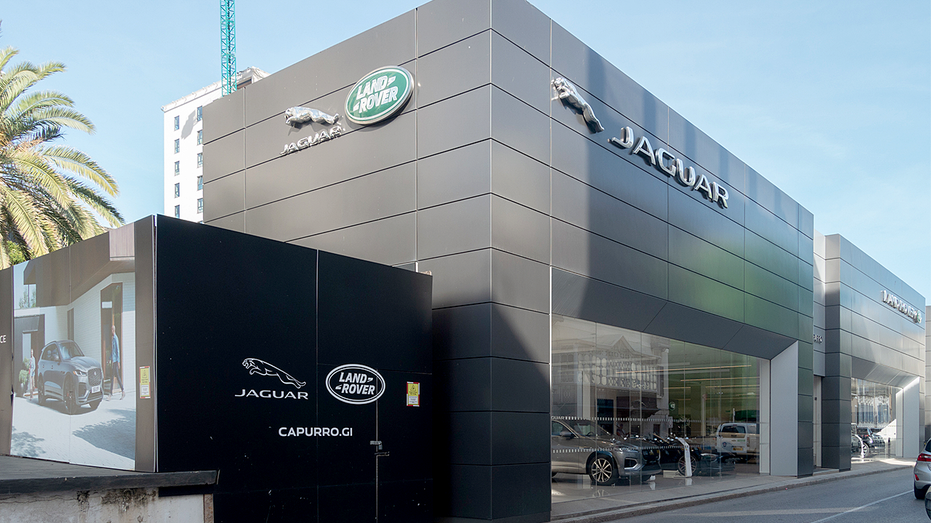
Showrooms for Jaguar and Landrover in Line Wall Road, Gibraltar, operated by A.M. Capurro, the official dealer in the city. (Getty Images / Getty Images)
“A company the size of JLR … at various times in its business cycle, the number of people it employs will change,” Reynolds told the BBC on Sunday. “If this is about making sure over time that the workforce is right to make the business as competitive as possible, that’s the conversation we need to have. But the government will not be giving support if it’s to bail people out.”
Unite General Secretary Sharon Graham stated that union leaders will take part in discussions with JLR executives to ensure hourly factory personnel are protected from compulsory job losses.
VAIL, COLO. — Nearly two years after the make America healthy again (MAHA) movement evolved from a campaign slogan to an official driver influencing federal policy and food manufacturing decisions, sugar industry leaders are assessing its broader impact on consumer perceptions of sugar and purchasing behavior, even as policymakers continue to pursue measures aimed at changing both.
“If you follow it closely, like I do, it feels like a disaster,” Courtney Gaine, president and chief executive officer of The Sugar Association, told attendees at the 41st annual International Sweetener Symposium in Vail. “You’ve got somebody with a very loud microphone and an echo chamber, and it feels like it’s been a nonstop barrage of attacks on sugar, whether it’s that sugar is as addictive as crack or sugar is poison. Then in January, the United States was launching a war on sugar. It’s hard to fight back against this narrative, so you kind of take it and hope that the damage isn’t too extreme.”
Gaine, a registered dietitian who also has a PhD in nutritional sciences and biochemistry, said the MAHA rhetoric, especially from Health and Human Services Secretary Robert F. Kennedy Jr., appears at odds with reality.
“We did a survey last March and it turns out that MAHA supporters are genuinely OK with sugar, so even though this movement is powerful and it’s loud and it’s chaotic, we felt like sugar might fare OK,” Gaine said, adding that another survey conducted in March of this year showed similar results. “About 90% of MAHA supporters still, a year and a half into the MAHA movement, feel that sugar is an important part of the diet and are okay with it.”
Advertisement
Brandon Lipps, a principal at Caprock Strategies who presented alongside Gaine at the Sweetener Symposium, said that while consumer demand for sugar has not collapsed, the emotional rhetoric behind the MAHA movement continues to drive policy change that has the potential to impact sugar usage.
“When you talk to parents whose kids have health issues, and when you talk to families who are dealing with health issues, and when Secretary Kennedy quotes all these statistics and tells them that they have a solution, they’re going to buy it,” Lipps told the Symposium attendees. “Emotion moves. It gains momentum. The only defense that sugar has is that the facts are actually on your side.”
“Emotion moves. It gains momentum. The only defense that sugar has is that the facts are actually on your side,” said Brandon Lipps (left), principal at Caprock Strategies.
| Source: Sosland Publishing Co.
Both Lipps and Gaine pointed to a chart showing obesity rates among adults and children climbed sharply even as added sugar consumption steadily declined.
Advertisement
“There are folks that have a lot of problems in this country, but sugar is not the single cause,” Lipps said. “It’s maybe not even a major cause of the health epidemic in this country.”
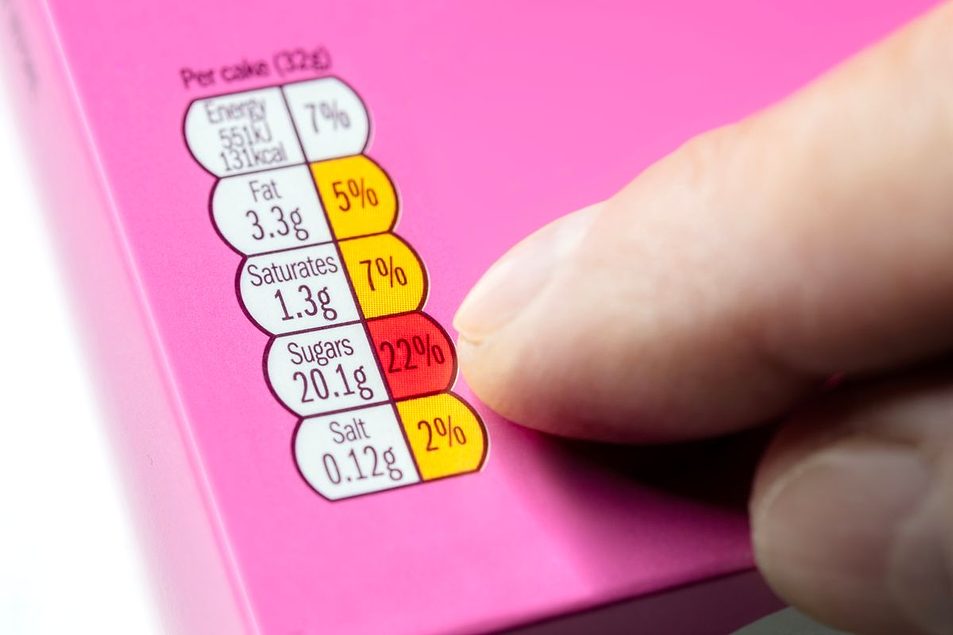
Still, recent policies that have either passed or are currently under legislative consideration may directly influence the decisions of consumers and food manufacturers when it comes to buying or making products with sugar. These include front-of-label packaging, reformulating school meals to align with the sugar consumption limits recommended in the 2025-2030 Dietary Guidelines for Americans, and restrictions on using federal-assisted food program dollars to purchase foods made with sugar.
Lipps said that despite evidence pointing toward consumers’ acceptance of sugar and the data that shows an incongruent correlation between obesity and sugar consumption, the Trump administration is targeting sugar usage as an easy win for political gains.
“We acknowledge we have a health crisis in this country, but we don’t know what the solution is,” he said. “But if I go on the campaign trail and cite all these statistics to you and I tell you that I’ve got the solution, you’d perk up and listen. And America is doing that. The thing that Secretary Kennedy did is he didn’t create the MAHA movement, he created the MAHA political narrative out of a movement that was out in the countryside.”
Advertisement
Gaine shared a similar perspective.
“Asking the MAHA supporters specifically about the rhetoric that had come out from RFK Jr. about the war on sugar and about sugar being as addictive as crack and about sugar being poison, about 60% of MAHA supporters feel that rhetoric goes too far,” she said. “There’s a lot still to come with what’s on the table for the MAHA movement, not to mention that the MAHA movement doesn’t necessarily end when the Trump administration ends. It actually might get stronger.”




























































You must be logged in to post a comment Login